Skip to content

Sorry, Kane

I guess this qualifies as a bootleg toy. Alien-inspired Whac-a-Mole game in a pizza place (Giovanni’s) in International Falls, MN. Actually, this is awesome.

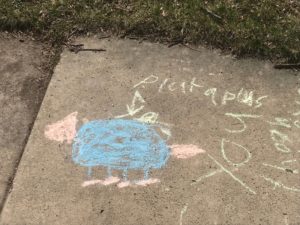
Added bonus: Bizarre art from a spider-stomping game. Same principle as Whac-a-Mole, kind of, except you use your feet.

I Collect Soda Pop Bottles

My latest acquisitions from a neat little antique store in International Falls, MN. If you weren’t aware that I collected bottles, my criteria are simple.

1. I prefer fired-on labels. But since most modern pops (I’m from the Midwest and Chicago, so I call it “pop”) have paper labels, I’m willing to give a local pop with a paper/printed label  a place in my collection if it’s (a) tasty and (b) particularly striking. Mostly, I like the fired-on labels. They just look better. Plastic bottles are anathema to me.

2. Beautiful/interesting/crazy art.

3. Optimistic names, or names that promise health, social status, and happiness.

Maybe I’ll start photographing my entire collection and run it here.

Fun fact: Most antique soda pop bottles are recovered from old privies.

He Holds Up a Mirror to Society, and It Is a Tacky Mirror

A.O. Scott demonstrates the tendency to try too hard to validate Todd Solondz’s plodding, soulless movie-making.

“He is unsparing in his attack on the complacencies of the suburban upper middle class, but to describe his attitude as cruel or contemptuous is to miss the compassion and the almost rabbinical ethical seriousness that drives his inquiries. And to take a movie like “Life During Wartime” as satire is to simplify its intentions and effects.”

Oh dear God. And here I was worrying there would never be another film attacking the complacencies of the suburban upper middle class. Just the other day I was telling my wife, “If ONLY there were some suburban upper middle class auteur who would take on their suburban upper middle class upbringing, so suburban upper middle class persons like myself could see how complex we are, and how our complacencies must be attacked.”

Solondz is neither cruel nor contemptuous, compassionate nor ethical. He’s witless, dull, and formulaic, staking out dark territory and wrapping it in that glacial, glassy-eyed Raymond Carver/John Updike style that charms the pseudo-intellectuals. The man takes the worst society has to offer and makes it, through some unknowable process, both creepy AND boring. I picture Solondz sitting down before each film, writing down nouns like “Rapist,” “Pederast,” and “Victim” and verbs like “Molest,” “Murder,” and “Rape” on slips of paper, throwing them in a hat, then picking them out at random to create characters and their motivations. Next he creates a timeline of disintegration, compounded by having not one but several characters’ lives slowly and painfully implode.

Solondz’s ability to get high-caliber actors such as Dylan Baker, Philip Seymour Hoffman, and others to mouth his twaddle is inexplicable to me, since it’s only by the power of their acting chops that his films are remotely watchable. It’s like watching Andres Segovia carry a garage band. Dylan Baker performed the amazing act of making a child rapist likable, though at the end of the day you need to ask yourself why. Answer: Solondz, in his desire to attack those dang complacencies, just wanted to sucker-punch us. Baker’s life is finished. His relationship with his son is irrevocably damaged. His family is destroyed. The community is in witch hunt mode. Fuck you. The end. Epilogue: Why in God’s name did we need a likable child rapist in the cinematic pantheon?

I’m sure it’s proposed that any negative criticism of Solondz films is based in prejudice because his films are hard to watch. Solondz’s films are hard to watch, it is proposed (as I infer), because they reveal that which we would rather not face. This is compounded, or rather muddled, by Solondz’s addition of an insincere jigger of emotion. By God, his characters may be damaged and unappealing, but they’re still human, and thus they deserve our sympathy. Roger Ebert (a Solondz supporter), said, if I may crib from the Wikipedia entry for Happiness,

“…the depraved are only seeking what we all seek, but with a lack of ordinary moral vision…In a film that looks into the abyss of human despair, there is the horrifying suggestion that these characters may not be grotesque exceptions, but may in fact be part of the mainstream of humanity.”

Reall? Ebert is a national treasure, but every now and then even he slides into ponderous-sounding muck. It sounds good, but apply the above sentiment to, say, John Wayne Gacy, or maybe just a pedophile priest. Still think they’re part of humanity’s mainstream, rather than walking horrors? Does someone need a hug?

You know why I like the show Dexter? Because it knows it’s satire/black comedy and clearly displays itself as such. Solondz’s films are described as satire, but his supporters really don’t want them to be. Labeled as black comedy, they’d lack the ambiguity that engenders gravitas. They’d be shown up as the crutch-kicking melodramas they really are. Also, they’d have to be funny in some way.

Solondz is accused of hating his characters. I don’t think he hates them. You can’t hate them because they’re made of cardboard, floating along on the windy whims of his plots and damp with crocodile tears.

Are his films challenging? Yes, in the way it’s hard to watch a kid with a runny nose licking away at his upper lip. But perhaps the booger-eater is a comment on society’s hypocrisy, and when we watch the vile little snot-gobbler, aren’t we just watching ourselves?

No, we’re not. And you’re trying too hard if you think we are in Todd Solondz’s movies.

Side note: I think Solondz first introduced Jane Adams in her perfect victim role. As Todd Field has proven, if you ever need a helpless, fragile as a glass unicorn whipping girl in your movie, hire Jane Adams. She always looks like she’s on the verge of hysterical tears, and won’t tell anyone what you did, no matter how many cigarettes you stubbed out on her.

How to Declare an Unsung Genius, No Matter How Rightfully Unsung He or She May Be

1. Find a period in history during which great strides were made in a particular artistic field and/or large groups of noteworthy individuals were lauded for their inarguable levels of talent.

2. Note appearances of peripheral attention-seeking figures (PASFs) in the noteworthy individuals’ lives. You may need to go all the way back to art school.

Look for these qualities:

a. Was the PASF known for outrageous behavior, usually to a distracting degree? (e.g., Nakedness in the classroom, nakedness in a public fountain (a classic), or nakedness in the shower, while others were trying to shower alone).

b. Did the PASF dress funny? Was it funnier than you’d expect for the time period? (e.g,, green hair during the Regency period, live animal hats in the Jazz Age, scrap metal undergarments at any given time)

c. Was the PASF stoned to the gills six days a week and unconscious the remaining day?

d. Were they sexually active to a degree that didn’t seem quite right? (e.g. voluminous anonymous group sex in public bathrooms with albino quadriplegic dwarves)

e. Was the PASF expelled from an educational institution because the instructors were close-minded simpletons who lacked vision by insisting the PASF turn in assignments?

f. Was the PASF frequently involved in criminal actions that seem amusingly quirky now, but which would piss off the reader if he or she were the PASF’s target today?

g. Did the PASF perform some stupid-ass action that done got their ass killed?

Having three or more of the above traits in their goodie bag is a good start for the PASF’s qualification as an unsung genius. Unsung geniuses don’t just live… they live, live, LIVE! (i.e., acted like selfish assheads.)

3. Going back to that golden epoch of artistry (e.g. the Renaissance, 1940s New York, any urban nightclub environment during the late 1970s), observe what took place about a year before anything interesting happened. Note the PASF’s behavior:

a. Did they appear onstage, play guitar badly, shout out a few lyrics, stumble around, vomit, and then pass out? Did the crowd, according to the two old-timers who swear they were there remember that the crowd howled for their blood, because their minds could not accept the violent and uncompromising truth they just saw, even though it took place at a church talent show? Congratulations, your PASF invented punk rock.

b. Was their creative output so minimal as to be nonexistent? Did their pamphlet, 7″, song fragment, or doodle inspire a larger work by a greater talent? Can you at least draw an imaginary line between it and, say, Ulysses or van Gogh’s Starry Night? Go ahead. Nobody’s looking.

c. Did they inspire more noteworthy artists through bizarre behavior, joyless fucking, extended crying jags, and destruction of the artists’ works, homes, and egos? Did this “inspiration” give way to productivity when they were finally driven off or died?

4. When presenting your theories, be sure to buy into your own bullshit, and forget that you’re engaging in revision for the sake of self-promotion. You really DO believe that this person was overlooked by all the major scholars of a field out of spite, obstinacy, or, I dunno, just to poke holes in their credibility and make their jobs harder. Goddamn it, it stands to reason.

Harvey Pekar Made Me the Man I Am Today (Sort of)

Harvey Pekar died yesterday. If the name doesn’t ring a bell you probably weren’t a comic collector in the 80s and 90s, or you missed the film version of Pekar’s comic American Splendor where Pekar was played by Paul Giamatti (accompanied by James “Doc Venture” Urbaniak and Judah “30 Rock” Friedlander as Pekar friends R. Crumb and Toby). Pekar was an irascible writer and jazz critic who fell into comic-making. It helped that he was friends with R. Crumb, who illustrated several seminal American Splendor stories and covers in the early issues. Starting in 1976, Pekar—a file clerk at a veterans hospital for much of his life—wrote stories about his daily toils that other cartoonists illustrated. Once a year, American Splendor came out, bearing stories about Pekar’s record-collecting, job travails, home life, and general philosophizing (a friend referred to him as a “blue-collar philosopher,” which suited him well).

The critics and mass media took notice of Pekar in the mid-80s after Doubleday released a trade paperback anthology of his work. Comics were coming into their own then. Frank Miller created the Dark Knight (which is why people think of Christian Bale before they remember Adam West when they hear “Batman” now). Alan Moore was re-imagining comics with Swamp Thing, Watchmen, and Miracleman. Art Spiegelman was midway through Maus. Neil Gaiman shimmered into existence with the Sandman, and Dan Clowes, Seth, and Chris Ware were warming up in the minor leagues.

Harvey, however, had been going at it for awhile, and on his own dime. He published every issue himself, paying the artists for their work, and distributing the comic strictly by mail and word of mouth. This was during an age when comics were still the exclusive province of dorks, and it was unthinkable for normal folks to consider curling up with a comic, whatever the subject. The man thanklessly toiled in comics Siberia for many years, only emerging once in a while to appear on The Late Show with David Letterman.

(This story led to me reading New Grub Street, which remains one of my favorite and most influential books.)

I heard about Harvey and American Splendor through a friend of a friend. He had a copy of the trade paperback, which I borrowed and devoured. I was, as you can imagine, different from most kids my age. Yes, I did the superhero thing through most of grade school and high school, but I needed something smarter. Then my friend (and his friend) introduced me to what we called, without irony, “alternative comics.” Alternative to what, you ask? DC and Marvel, and the adolescent male fascination with god-like men and women in spandex. Much of our taste was informed by the Comics Journal and Gary Groth’s take no prisoners criticism (which, when I read it now, reads more like a desperate, fretful, flailing attempt to be taken seriously), but while my friends took the hard-nosed “This Is Good/That Is Bad” approach, I just went with my gut. To this day I still don’t see what was so fantastic about Love and Rockets, though older me can appreciate the series’ lovely art. Comparatively, I saw something in the initial googiebation style of Dan Clowes’ Lloyd Llewellyn that bespoke greatness. Much of my taste and personal philosophy developed during this period, and American Splendor contributed to it in no small way.

Most reviewers, positive and negative, harped on Pekar’s everyday approach to storytelling. His life wasn’t adventurous; hell, most of the time it wasn’t even interesting in and of itself. Stories revolved around collecting jazz records, grocery shopping, finding a girlfriend, arguing at work, and so on. This was before a slew of GenEx cartoonists took Harvey’s idea and began churning out tales of their hand-to-mouth existences, toy collections, shitty dietary habits, and masturbation sessions. The difference was that Pekar was an introspective American polymath with a hardscrabble background. His type of personality and viewpoint, informed by the Beats, Yiddish culture, and old school lefties, isn’t so common anymore.

Pekar could be a major pain in the ass in his stories. Back when I was writing for a comic zine I was both in awe of his work and vexed by his selfishness. His worst comics usually dealt with his cheapness. One demonstrated how he kept crossing a street in New York to get free candy bars from street hawkers, filling an entire shopping bag. Intended to be humorous, I’m sure, it only seemed self-serving (though I did pick up the phrase “I gotta make hay while the sun shines.” from the comic’s final panel). Likewise the strips where he bitched about being ill-treated and unappreciated by editors, or, more memorably, on the Letterman show seemed like unreasoning self-immolation to my young, unpublished self. Re-watching that clip and rereading those old stories, however, after about 20 years of being a published writer, I found myself sympathizing with Pekar. The interviews aren’t Letterman’s finer moments, and while Pekar comes off like a grouchy nut, they reveal what a shallow fratrat Letterman could be back before the heart attack, baby, and blackmail attempt. Dave wanted Harvey to be a performing monkey—some crazy crank pulled off the street and bull-baited into crazed rants about not getting free donuts or what-have-you. Harvey wouldn’t have it, choosing instead to call out NBC’s parent company, GE on their evil ways. By not playing the game, Pekar was one of the few folks to strike Letterman dumb, and while I’ll always love Dave’s comedy, he needed to be taken down a peg or two back then. Banning Pekar for several years did not impress me, nor the nasty remark about Pekar’s “little Mickey Mouse weekly reader.” As it turned out, Pekar sold no more copies of American Splendor after appearing on the Late Show than he usually did. So much for the brass ring everyone kills themselves to reach.

Above all, I liked Pekar’s pragmatism. When he presented a thought on morality or manners, it was a rough-hewn jewel. The below panels still come back and speak to me after 25 years.

(Yes, John. I remember that Mike M. picked some of these panels too.)

I saw Harvey exactly twice, I think. But I might be splitting the same encounter into two separate ones. The superhero-loving fans at the 1986 Comicon didn’t know what to make of Pekar. As I recall, the fanboys swarmed Howard Chaykin, Steve Rude, and George Perez’s tables, but Pekar and his wife entertained a small group of four folks, three of whom were me and my friends. Pekar’s wife, Joyce, as I recall, was ranting about the appearance of the cover of American Splendor #4 on the back of a Dr. Demento LP (“That’s like fucking with MICKEY MOUSE!” she shrieked), and they chatted a little bit about sending the good doctor a cease and desist letter. Later on, when the “crowd” thinned out, and the somewhat scary Joyce had left, I walked over to Pekar’s table and asked him to sign my trade PB of American Splendor. “Sure,” he said, signing it with a simple, “To Dan, Harvey Pekar.” “I love your work, ” I opined with startling originality. “Well, thanks, man!” Pekar rasped. Then I told him what my favorite stories were: “How I Quit Collecting Jazz Records and Published a Comic Book with the Money I Saved” and a few others. I mentioned loving Crumb’s work, though I’d only just started collecting reprints of his underground comics  (again, this was pre-Internet, when complete compilations of most comic artists’ work weren’t readily available). “Yeah, Crumb is one of America’s finest cartoonists,” said Harvey, and he went on to describe his friend in large, historical terms. We chatted some more, and then I asked him if I could take a picture or two with my dopey little Instamatic for the comics-based amateur press alliance I wrote for back then. “Sure, sure,” said Pekar. Before taking this one he asked if he should be doing something. “Whatever you like,” I said. So he started stacking American Splendors. “All right! Harvey Pekar action shots!” I said, which made him chuckle.

Then I took this shot, which pretty much says it all about Mr. Harvey Pekar.

It kills me that, in these pictures, he’s only about four years older than I am right now.

A week after the con, I sent Pekar a fan letter, money and an order for a few more American Splendors, accompanied by the photos. He wrote back something like, “Dan, Thank you for the photos, which were good ones. Please pick an issue of AS of your choice.” Naturally, I was flabbergasted. For my poor 18-year-old self, this was incredible largesse… and from a TV celebrity no less! There’s that “elementary sense of social responsibility,” or as I wrote back, “Quid pro quo LIVES!”

R.I.P., Harvey. I haven’t followed American Splendor for quite some time, but I have to say that I’ll miss the man. He made comics a lot more interesting.

“And as He Folded the Paper, He Would Caress and Palpitate It to Orgasm…”

Eyugggh. I don’t know what’s worse: Zell’s blinkered, cost-cutting measures (right though he is about the inevitability of electronic papers, he’s only doing this because he can shave off a few more dollars and tie in with the iPad rather than imagining the democratic and artistic possibilities of all-electronic dissemination) or the inevitable batch of paper fetishist op-ed columns that will emerge as a result. If I read one more orgiastic memory of a grandfather carefully folding his newspaper as he reads it over coffee one Sunday morning, I’m going to hurl.

Speak Softly and Carry a Big…

Someone I know asked me why I don’t respond to her e-mails—usually ones with funny links or forwarded messages—with longer replies. She’s right about my brevity. Unless I have a point to make requiring extra verbiage, I’m spare with words. If you send me a link to a funny video or a photo of a dog in flippers and a sombrero or whatever, I’ll write back, “Cute!” or “Funny!” and leave it at that. If, in another instance, you compliment a piece I’ve written, unless you ask me a direct question I’ll just reply with something like, “Thanks for the kind words. I really appreciate that.” And I do appreciate it. I’m just not going to gush. That would be unseemly. Also, I never figure anyone is really waiting for me to babble. I don’t want to waste their time.

Outside of e-mail, but in the same vein, I’ve always been vaguely aware that my quietness can be taken as rudeness, especially when people try to engage me in conversation. I’m not very good at picking up verbal and visual cues, so I go for the safety of assuming I’m boring everyone. Hence, I keep things brief, unless the situation requires length.

But as I’ve grown as a person and trained myself to pick up on those cues, I’ve learned that some people are not particularly interested in hearing me speak at length, ever. People have different ideas about what “at length” means. I’ve been interrupted while offering very short answers to questions. I’ve been asked my opinion, and after 10 seconds the questioner is off speaking to someone else. In my favorite moment, I was asked a question, and as I opened my mouth, someone next to me (not Mike) started answering the question FOR me. Sometimes it’s better to be silent and still.

Largely, it’s my voice and demeanor. Like my father, I speak in low, modulated tones; unlike him I mumble. As a lawyer and ex-politician, Dad learned to project his voice when needed, but in conversation he only raises his voice when noise pollution rises in the immediate vicinity. Even then he’s not a shouter. I’m with him on that one—in most conversation there’s no need to to yell. Hilariously, if you rudely interrupt my dad, he’ll adjust the power, not the volume, of his voice and run you over like a bulldozer. I’ve noticed this mostly happens with people who fancy themselves mavericks. They ask Dad a question, and as he methodically outlines his answer they try to “help” him along, interrupting, shout-talking at him as if they’re at a nightclub, trying to prod him into reaching the answer they want, not the answer they need. Then Dad takes a breath and lets fly with his deep, bludgeoning locomotive voice. I’ve seen people step back, startled, when he does that. Defying authority has become so rote these days, it amazes people when they encounter an authority figure who won’t bend to their desires. I suppose it’s a turn off for some people, and they think Dad is being overbearing, but from my perspective he’s doing what’s best for them, even if they don’t know it. Whenever I meet someone who takes their time explaining something, I listen, especially if they seem to know what they’re talking about. In conversation, what is a person supposed to be doing instead?

So, why don’t I speak up? Why don’t I engage?

If I’m at work it’s because I’m there to work, not gabble. I shoot the breeze like anyone else, but I’ve been hired to edit and proof, and edit and proof I shall. I think my reputation for rudeness (or, at least, aloofness) comes from my habit of not realizing when people I barely speak to want to talk to me. I come into the cafeteria, say “Hey” or “Good morning” to whoever, get my coffee, and leave. When someone (again, usually someone I barely converse with) asks me “How’s your son?” or “Going anywhere for vacation?”, it doesn’t register because I’m thinking “Get coffee. Go back to desk. Proof. Edit. Write.” My co-workers often have to (“have to”) ask the question again, which boggles me for a few seconds as my brain registers what they’re saying.

“Excuse me?” I ask.

“How’s your son?/Going anywhere for vacation?/Etc.”

Okay, there’s a little rude part of me that causes me to knit my brow when I hear these questions. I can’t for the life of me understand why a passing acquaintance is asking me about my life. It hasn’t occurred to me—and I suppose I’m an ass for this—to wonder about their life. I’m a liberal guy, and I believe in fair play, freedom, happiness, and all that shit, but I don’t get into the nitty-gritty of the lives of (key word) EVERYONE around me. I won’t say I don’t care, but I can’t say I care all that much because I fail to see the relevance of such conversation. It’s okay, I don’t expect my life to enthrall anyone. That’s not self-effacement, it’s just fact.

Which is minorly monstrous, I guess, though in my defense I don’t think I’m hurting anyone as long as I keep my mouth shut and maintain an expression of rapt interest. Mike has coached me on this over the years. I’ve learned to make eye contact and have a set of answers ready now. My humanity is coming along nicely.

How’s my son?

* He’s healthy and happy and growing every day.
* He’s all boy.
* He’s into everything.

Going anywhere on vacation?:

* Nope, staying home and working on the house.
* Yes, we’re heading to XYZ destination.
* I am a Lincoln/Architecture/History/Whatever buff.

I cleave to a script, and it’s interesting how little difference it makes since everyone else has his or her own script as well. I don’t do this to be a jerk. I’m just missing a necessary something that many people seem to have in order to engage in normal social interactions. When people who I don’t know very well  try to have conversations with me, I’m incapable of recognizing that they want to talk to me, because when I talk I’m usually interrupted, because, I guess, I’m not honoring the rules. I just wish I knew what the rules were. If nothing else I’d be a better conversation faker.

And that, dear children, is why I write.

Louis Sullivan

Pictures from the “Sullivan’s Idea” show at the Chicago Cultural Center. Compact and amazing. I’ll comment further when I get time.

Old Haunts

Click the pictures for a short reminiscence.

The Colour Out of Space

Post-storm/tornado warning skies in Chicago are the weirdest.